-
Shop
- Advanced Technologies
- Best-Sellers
- Car Accessories
- Dating & Social Skills
- Digital Resources
- Budgeting & Saving
- Emotional Intelligence
- Entrepreneurship & Business Growth
- Financial Independence
- Financial Mindset & Psychology
- Goal Setting
- Leadership
- Mindfulness
- Motivation
- Online Business
- Positive Thinking
- Productivity
- Self Confidence
- Sleep Improvement
- Stress Management & Relaxation
- Yoga & Mind-Body Practices
- Education & Learning
- Family & Parenting
- Fashion
- Alexander McQueen
- Bags
- Bags & Wallets
- Balenciaga
- Belts
- Blazers
- Blouses & Shirts
- Bottega Veneta
- Bottoms
- Brunello Cucinelli
- Burberry
- Chanel
- Chloé
- Dior
- Dolce & Gabbana
- Dresses
- Etro
- Fendi
- Gucci
- Jacquemus
- Jewelry
- Jil Sander
- Keychains
- Kiton
- Luggage
- Luggage Bags
- Miu Miu
- Off-White
- Outerwear
- Prada
- Rick Owens
- Saint Laurent
- Shoes
- Socks & Tights
- The Row
- Tom Ford
- Valentino
- Valentino Garavani
- Versace
- Vivienne Westwood
- Fashion Accessories
- Furniture
- Gadgets
- Guess
- Headphones
- Health & Beauty
- Health & Wellness
- Home & Garden
- Home Supplies
- Kids & Babies
- Kitchen
- Kitchen Best-Sellers
- Lighting
- Patio, Lawn & Garden
- Personal Growth
- Pet Care
- Pet Supplies
- Pets
- Sport & Outdoors
- Super Deals
- TikTok Growth & Monetization Mastery
- Travel
- Wealth
- Popular
- Best deals
Disposable Gloves Compared: Latex, Nitrile & More

What are the five main types of disposable gloves?
The five main types are latex, nitrile, vinyl, polyethylene, and neoprene gloves. They differ in flexibility, durability, allergy concerns, and the tasks they’re suited for. The right choice depends on what you’ll handle and how much protection and dexterity the job requires.
Latex gloves
Latex gloves are made from natural rubber and are known for a close, flexible fit that supports precise hand movements. They’re used for many light-duty tasks, but latex proteins can cause allergic reactions. If you or someone who may wear the gloves has a latex allergy, choose a non-latex option.
Nitrile gloves
Nitrile gloves are made from synthetic rubber and are a popular latex-free choice. They generally offer good puncture resistance and a snug fit, making them useful for food handling, cleaning, and many healthcare tasks. Chemical resistance varies by product and substance, so choose gloves rated for the chemicals you’ll encounter.
Vinyl gloves
Vinyl gloves are made from PVC. They’re often used for short, low-risk tasks where frequent glove changes are practical, such as basic food preparation. Compared with latex or nitrile, vinyl tends to be less elastic and may provide a looser fit, so it may not suit work requiring fine control or extended wear.
Polyethylene gloves
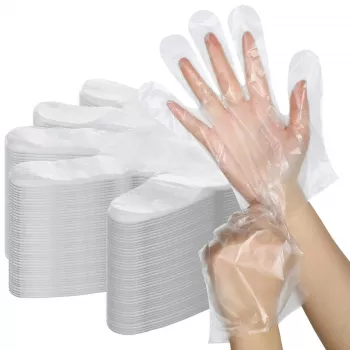
Polyethylene gloves are lightweight and typically have a loose fit. They’re commonly used for brief food-service tasks, such as handling ready-to-eat items, when the wearer needs to change gloves often. Their limited fit and durability make them a poor choice for tasks that call for precision or a strong barrier.
Neoprene gloves
Neoprene gloves are made from synthetic rubber and can offer flexibility and resistance to certain chemicals. They’re used in some medical, laboratory, and industrial settings. Protection depends on the glove and the substance involved, so match the product’s stated ratings to the task rather than assuming all neoprene gloves protect against the same hazards.
For more guidance on choosing disposable gloves, visit our guide to the five main types of disposable gloves. Consider material, fit, intended use, and any allergy or chemical-safety needs before selecting a pair.
FAQ
How should you choose disposable gloves for food preparation?
Choose gloves intended for food handling and suited to the task, such as nitrile for a closer fit or polyethylene for brief handling with frequent changes. Change gloves when switching tasks or when they become torn or contaminated.














Leave a comment