-
Shop
- Advanced Technologies
- Best-Sellers
- Car Accessories
- Dating & Social Skills
- Digital Resources
- Budgeting & Saving
- Emotional Intelligence
- Entrepreneurship & Business Growth
- Financial Independence
- Financial Mindset & Psychology
- Goal Setting
- Leadership
- Mindfulness
- Motivation
- Online Business
- Positive Thinking
- Productivity
- Self Confidence
- Sleep Improvement
- Stress Management & Relaxation
- Yoga & Mind-Body Practices
- Education & Learning
- Family & Parenting
- Fashion
- Alexander McQueen
- Bags
- Bags & Wallets
- Balenciaga
- Belts
- Blazers
- Blouses & Shirts
- Bottega Veneta
- Bottoms
- Brunello Cucinelli
- Burberry
- Chanel
- Chloé
- Dior
- Dolce & Gabbana
- Dresses
- Etro
- Fendi
- Gucci
- Jacquemus
- Jewelry
- Jil Sander
- Keychains
- Kiton
- Luggage
- Luggage Bags
- Miu Miu
- Off-White
- Outerwear
- Prada
- Rick Owens
- Saint Laurent
- Shoes
- Socks & Tights
- The Row
- Tom Ford
- Valentino
- Valentino Garavani
- Versace
- Vivienne Westwood
- Fashion Accessories
- Furniture
- Gadgets
- Guess
- Headphones
- Health & Beauty
- Health & Wellness
- Home & Garden
- Home Supplies
- Kids & Babies
- Kitchen
- Kitchen Best-Sellers
- Lighting
- Patio, Lawn & Garden
- Personal Growth
- Pet Care
- Pet Supplies
- Pets
- Sport & Outdoors
- Super Deals
- TikTok Growth & Monetization Mastery
- Travel
- Wealth
- Popular
- Best deals
Deep Frying Pan Names: Skillet, Sauté Pan, or Fryer?
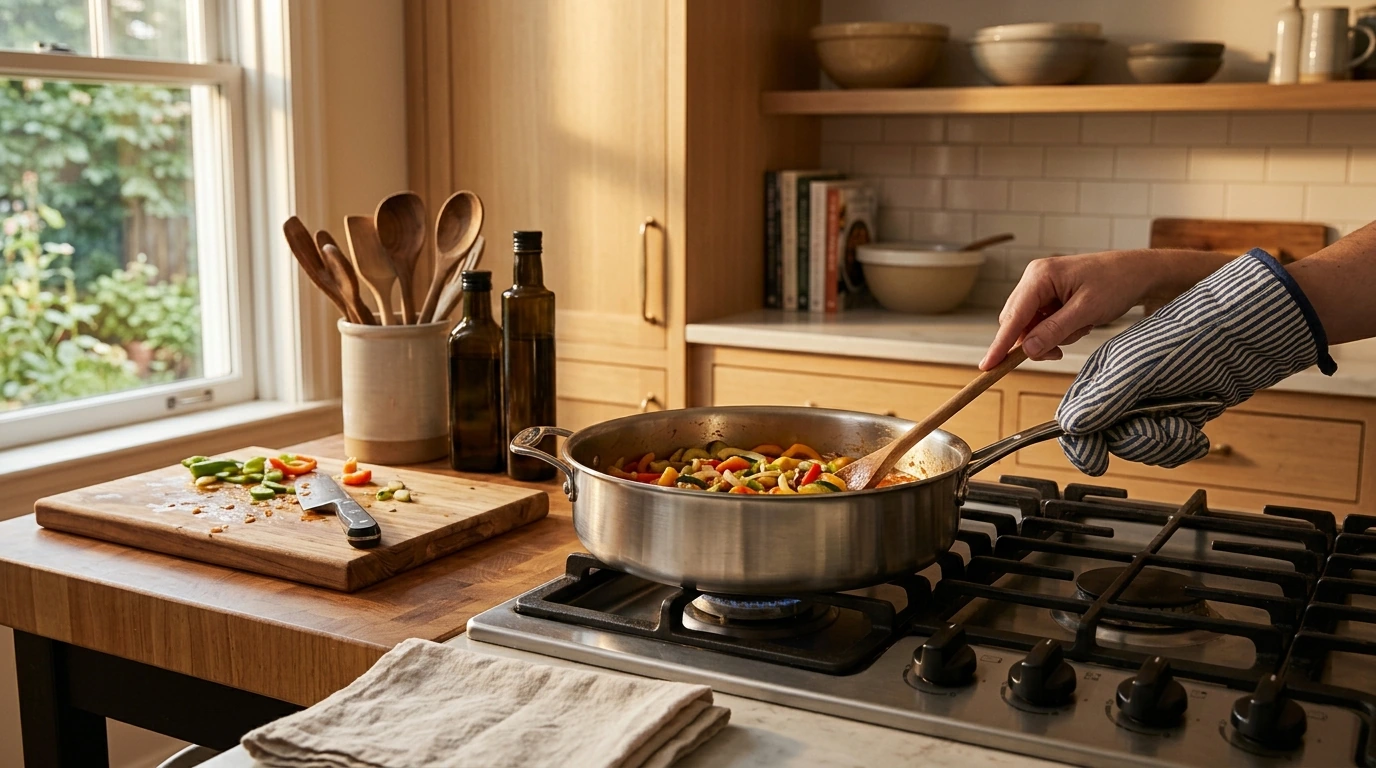
What is a deeper frying pan called?
A deeper frying pan is commonly called a deep skillet or deep frying pan. Depending on its shape and intended use, you may also see it sold as a sauté pan or chicken fryer. These names overlap, so compare the pan’s sides, depth, and included lid rather than relying on the label alone.
How the common pan styles differ
A deep skillet usually has sloped sides like a standard frying pan, but with extra depth to hold more food and reduce splattering. A sauté pan typically has straight, taller sides and a wide, flat base. That shape gives you room to stir ingredients and arrange food in a single layer, while the straight sides help contain liquids.
A chicken fryer is generally a deep, wide skillet with a lid, designed for frying or braising pieces of chicken. The name describes a traditional use, not a requirement: you can use one for other stovetop meals, too.
Which one should you choose?
Choose a deep skillet if you want a familiar frying-pan shape with extra room for vegetables, one-pan dinners, or shallow frying. A sauté pan is a practical choice for dishes that move from browning to simmering, such as pan sauces, braises, and risotto. If you often cook larger portions or want a lid for covered cooking, a chicken fryer or lidded deep skillet may suit you.
Before buying, consider the cooking surface diameter, total depth, handle comfort, and whether the pan is compatible with your stovetop. A larger, deeper pan can be heavier when full, so make sure you can lift and maneuver it comfortably. For stovetop frying, leave enough space for food and bubbling oil; don’t fill the pan to the rim. For large batches of deep-fried food, a dedicated deep fryer may be easier to manage.
Can you use a deep skillet instead of a regular frying pan?
Yes. A deep skillet can brown, sauté, and shallow-fry foods much like a regular frying pan, while its taller sides offer more room for ingredients and splashes. Its added depth can make it bulkier to handle and store, so choose the shape that best fits your everyday cooking.
For a quick overview of pan names and uses, visit our guide to deeper frying pans.
FAQ
What is the difference between a sauté pan and a skillet?
A skillet usually has sloped sides, while a sauté pan has straight, taller sides. Both can brown and cook food on the stovetop, but the sauté pan’s shape is especially handy for stirring and containing sauces or liquids.
Recommended for you

Choose a Quality Stainless Steel Cutlery Set
Oct 1, 2026











Leave a comment