-
Shop
- Advanced Technologies
- Best-Sellers
- Car Accessories
- Dating & Social Skills
- Digital Resources
- Budgeting & Saving
- Emotional Intelligence
- Entrepreneurship & Business Growth
- Financial Independence
- Financial Mindset & Psychology
- Goal Setting
- Leadership
- Mindfulness
- Motivation
- Online Business
- Positive Thinking
- Productivity
- Self Confidence
- Sleep Improvement
- Stress Management & Relaxation
- Yoga & Mind-Body Practices
- Education & Learning
- Family & Parenting
- Fashion
- Alexander McQueen
- Bags
- Bags & Wallets
- Balenciaga
- Belts
- Blazers
- Blouses & Shirts
- Bottega Veneta
- Bottoms
- Brunello Cucinelli
- Burberry
- Chanel
- Chloé
- Dior
- Dolce & Gabbana
- Dresses
- Etro
- Fendi
- Gucci
- Jacquemus
- Jewelry
- Jil Sander
- Keychains
- Kiton
- Luggage
- Luggage Bags
- Miu Miu
- Off-White
- Outerwear
- Prada
- Rick Owens
- Saint Laurent
- Shoes
- Socks & Tights
- The Row
- Tom Ford
- Valentino
- Valentino Garavani
- Versace
- Vivienne Westwood
- Fashion Accessories
- Furniture
- Gadgets
- Guess
- Headphones
- Health & Beauty
- Health & Wellness
- Home & Garden
- Home Supplies
- Kids & Babies
- Kitchen
- Kitchen Best-Sellers
- Lighting
- Patio, Lawn & Garden
- Personal Growth
- Pet Care
- Pet Supplies
- Pets
- Sport & Outdoors
- Super Deals
- TikTok Growth & Monetization Mastery
- Travel
- Wealth
- Popular
- Best deals
Make a DIY Faucet Extender with Food-Safe Silicone Tubing

How to make a faucet extender?
A simple homemade faucet extender can be made from a short piece of flexible, potable-water-rated silicone tubing. It creates a longer path for the water stream, which may make handwashing easier in a shallow sink. Treat it as a temporary solution, and don’t use tubing unless its label says it is suitable for contact with drinking water.
What you’ll need
- Potable-water-rated silicone tubing with an inside diameter that fits snugly over your faucet outlet
- A ruler and scissors or a sharp utility knife
- A clean towel
How to make and fit it
- Measure the faucet outlet and choose tubing that fits over it without forcing or stretching it. Don’t remove the aerator or cover threaded parts to make the tubing fit.
- Cut a piece about 2 to 3 inches long. Make the cut straight so the opening stays round and water can flow freely.
- Wash the tubing with dish soap and warm water, rinse it well, and dry the faucet outlet.
- Slide the tubing onto the outlet just far enough to hold securely. Don’t use glue, tape, metal clamps, or other materials that could damage the faucet or contact the water.
- Turn on the cold water at a low flow over the sink. Check for leaks, slipping, kinks, or spraying. Remove the tubing immediately if it shifts or restricts the flow.
Safety and care
Never leave a homemade extender on an unattended faucet, and remove it after use so it can drain and dry. Wash it regularly and replace it if it becomes cloudy, cracked, sticky, or difficult to clean. Don’t use it with hot water unless the tubing is specifically rated for that temperature. If the tubing won’t fit securely, skip the DIY version rather than tightening it with a fastener.
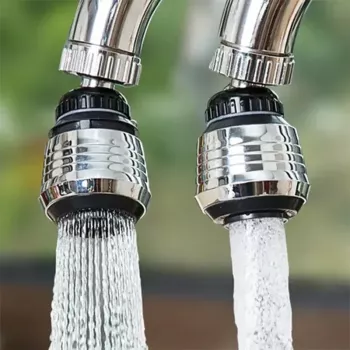
For a ready-made option with a rotating outlet and two spray modes, see the guide to a 360-degree rotating faucet extender.
FAQ
Can a faucet extender affect water pressure?
Yes. A narrow, kinked, or poorly fitted extender can restrict flow or cause splashing and leaks. Use a short, unobstructed piece that fits securely, and remove it if the stream changes noticeably.














Leave a comment