-
Shop
- Advanced Technologies
- Best-Sellers
- Car Accessories
- Dating & Social Skills
- Digital Resources
- Budgeting & Saving
- Emotional Intelligence
- Entrepreneurship & Business Growth
- Financial Independence
- Financial Mindset & Psychology
- Goal Setting
- Leadership
- Mindfulness
- Motivation
- Online Business
- Positive Thinking
- Productivity
- Self Confidence
- Sleep Improvement
- Stress Management & Relaxation
- Yoga & Mind-Body Practices
- Education & Learning
- Family & Parenting
- Fashion
- Alexander McQueen
- Bags
- Bags & Wallets
- Balenciaga
- Belts
- Blazers
- Blouses & Shirts
- Bottega Veneta
- Bottoms
- Brunello Cucinelli
- Burberry
- Chanel
- Chloé
- Dior
- Dolce & Gabbana
- Dresses
- Etro
- Fendi
- Gucci
- Jacquemus
- Jewelry
- Jil Sander
- Keychains
- Kiton
- Luggage
- Luggage Bags
- Miu Miu
- Off-White
- Outerwear
- Prada
- Rick Owens
- Saint Laurent
- Shoes
- Socks & Tights
- The Row
- Tom Ford
- Valentino
- Valentino Garavani
- Versace
- Vivienne Westwood
- Fashion Accessories
- Furniture
- Gadgets
- Guess
- Headphones
- Health & Beauty
- Health & Wellness
- Home & Garden
- Home Supplies
- Kids & Babies
- Kitchen
- Kitchen Best-Sellers
- Lighting
- Patio, Lawn & Garden
- Personal Growth
- Pet Care
- Pet Supplies
- Pets
- Sport & Outdoors
- Super Deals
- TikTok Growth & Monetization Mastery
- Travel
- Wealth
- Popular
- Best deals
Stress-Relief Knitting Checklist: Calm Routine in 30 Minutes
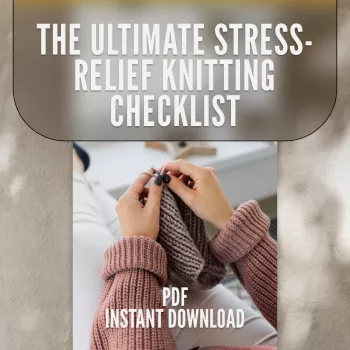
The Ultimate Stress-Relief Knitting Checklist for Calm, Comfort, and Consistent Practice
Knitting can be a steady, repeatable way to downshift from a busy day—especially when the setup is simple and the session has a clear, calming flow. This guide turns stress-relief knitting into an easy routine: prepare a cozy space, choose the right kind of project for the mood, knit with relaxed hands and shoulders, and close the session with a clean reset so it feels inviting to return tomorrow.
Why knitting feels calming when life feels loud
- Rhythm and repetition: simple stitches create a steady pace that helps attention settle instead of ricocheting.
- Hands-on focus: following rows and counting stitches gently narrows the mental “tab overload.”
- Progress you can touch: visible growth (even a few rows) supports a sense of control and completion.
- A quieter alternative to screens: swapping scrolling for stitching can reduce overstimulation before bed or after work.
- Low-pressure creativity: color and texture offer expression without needing “perfect” results.
Stress can show up in the body as tight muscles, shallow breathing, and sleep disruption—so a small daily relaxation ritual can make a meaningful difference over time. For a quick, research-informed refresher on how stress affects your system, see the American Psychological Association overview.
Set up a stress-friendly knitting space in 5 minutes
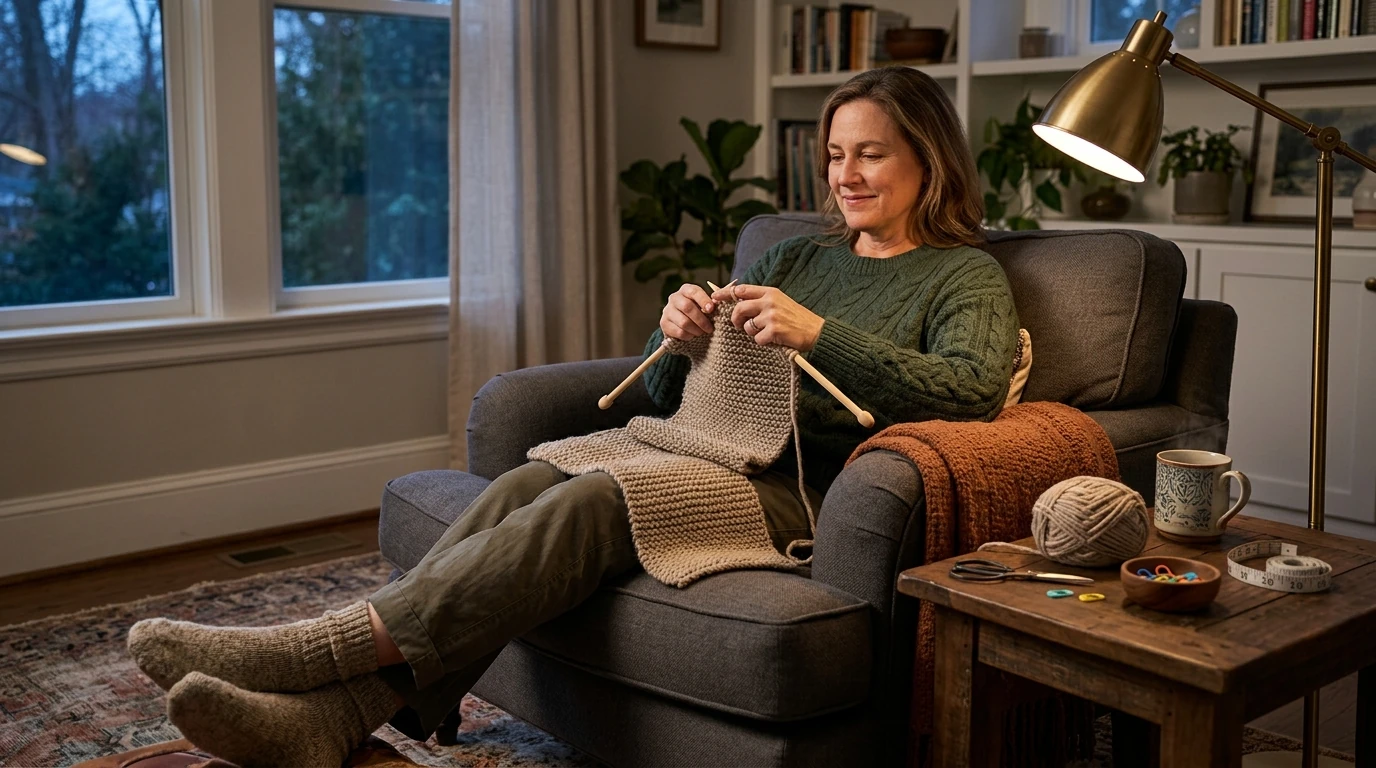
- Light: use a soft lamp aimed at your hands to reduce eye strain and tension in the forehead and jaw.
- Seating: keep feet grounded; support the lower back; place elbows near the torso to avoid shoulder hiking.
- Temperature and touch: keep a small blanket or shawl nearby; choose yarn that feels pleasant against the skin.
- Sound: pick a consistent background (quiet playlist, nature sounds, or silence) to signal “downshift time.”
- Tools within reach: stitch markers, scissors, tape measure, and a pen/notebook reduce frantic searching mid-row.
If your current setup leaves you perched or bracing, upgrading one “comfort anchor” can help—like a chair that supports relaxed shoulders and a grounded posture. If you want a dedicated craft seat that works for long sessions, consider the Versatile Mid Century Nordic Dining Chair for Home and Events.
Choose the right project for the kind of stress you have today
- For mental overload: pick a simple, repeating pattern (garter stitch scarf, basic hat) to minimize decisions.
- For restless energy: choose a project with gentle variety (striped dishcloths, easy texture repeats) to stay engaged without pressure.
- For low motivation: pick “tiny wins” projects (swatches, coasters, headbands) that finish quickly.
- For anxious perfectionism: choose forgiving yarn (heathered or fuzzy) and patterns where minor tension shifts aren’t obvious.
- For nighttime winding down: avoid complicated charts; choose larger needles and smooth yarn to reduce strain.
Project picks by mood and energy
| How you feel | Best project style | Why it helps | Avoid if possible |
|---|---|---|---|
| Overwhelmed and scattered | Mindless repeat (garter, stockinette in the round) | Less decision fatigue; steady rhythm | Complex lace/charts |
| Restless or fidgety | Easy texture or stripes | Keeps attention without stress | Long, identical rows with no milestones |
| Tired and low drive | Small items (coasters, mug rugs, swatches) | Quick completion boosts momentum | Large blankets with slow progress |
| Self-critical or perfectionistic | Forgiving yarn + relaxed gauge goals | Reduces visual “mistake scanning” | High-contrast yarn with tight gauge |
| Ready for deeper calm | Simple project + intentional pace | Supports a meditative flow state | Time-pressured gifts with deadlines |
The checklist routine: begin → settle → knit → close
If you want a ready-to-follow page you can keep in your project bag (or pin near your favorite chair), The Ultimate Stress-Relief Knitting Checklist (digital download) turns the routine into a quick, repeatable reset—especially on the days when decision-making feels heavy.
Comfort-first technique: knit without feeding tension
If you’d like a broader menu of relaxation skills to pair with knitting—like breathwork and progressive muscle relaxation—the Mayo Clinic’s relaxation techniques guide is a practical companion.
Make it stick: simple habits that turn knitting into a reliable reset
For a little extra “fresh start” feeling, some knitters like to refresh their craft corner before the next session—tidy notions, clear the surface, and keep lint and fuzz from building up. If you’re doing any crafting that involves spraying (like blocking accessories or nearby DIY projects), a contained workspace such as the Spray Shelter for Furniture & Craft Projects can help keep the area calmer and cleaner.
A printable guide to keep nearby
If you want an instant, print-friendly version that covers setup, posture cues, session timing, and a closing reset, keep The Ultimate Stress-Relief Knitting Checklist (digital download) where you knit most—so the calm routine is always one small decision away.
FAQ
Is knitting actually good for stress relief?
It can be, especially when the project is simple and the session is short enough to stay comfortable. Repetitive handwork and gentle focus may support relaxation, and pairing knitting with calm breathing and good posture tends to help even more.
What should a beginner knit for a calming experience?
Choose an easy repeat like a garter stitch scarf, a dishcloth, or a basic hat in the round. Use forgiving yarn and set a small goal (like 10 minutes or a handful of rows) so it feels soothing rather than demanding.
How long should a stress-relief knitting session be?
Many people do well with 10–30 minutes, with quick micro-breaks to relax hands, shoulders, and eyes. Stop before strain starts so the next session feels inviting instead of daunting.
Recommended for you

1080P Night Vision Binoculars: 5X Zoom + IR Guide
Sep 22, 2026









Leave a comment