-
Shop
- Advanced Technologies
- Best-Sellers
- Car Accessories
- Dating & Social Skills
- Digital Resources
- Budgeting & Saving
- Emotional Intelligence
- Entrepreneurship & Business Growth
- Financial Independence
- Financial Mindset & Psychology
- Goal Setting
- Leadership
- Mindfulness
- Motivation
- Online Business
- Positive Thinking
- Productivity
- Self Confidence
- Sleep Improvement
- Stress Management & Relaxation
- Yoga & Mind-Body Practices
- Education & Learning
- Family & Parenting
- Fashion
- Alexander McQueen
- Bags
- Bags & Wallets
- Balenciaga
- Belts
- Blazers
- Blouses & Shirts
- Bottega Veneta
- Bottoms
- Brunello Cucinelli
- Burberry
- Chanel
- Chloé
- Dior
- Dolce & Gabbana
- Dresses
- Etro
- Fendi
- Gucci
- Jacquemus
- Jewelry
- Jil Sander
- Keychains
- Kiton
- Luggage
- Luggage Bags
- Miu Miu
- Off-White
- Outerwear
- Prada
- Rick Owens
- Saint Laurent
- Shoes
- Socks & Tights
- The Row
- Tom Ford
- Valentino
- Valentino Garavani
- Versace
- Vivienne Westwood
- Fashion Accessories
- Furniture
- Gadgets
- Guess
- Headphones
- Health & Beauty
- Health & Wellness
- Home & Garden
- Home Supplies
- Kids & Babies
- Kitchen
- Kitchen Best-Sellers
- Lighting
- Patio, Lawn & Garden
- Personal Growth
- Pet Care
- Pet Supplies
- Pets
- Sport & Outdoors
- Super Deals
- TikTok Growth & Monetization Mastery
- Travel
- Wealth
- Popular
- Best deals
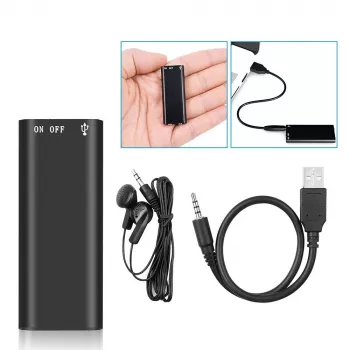
Mini 8GB USB Pen Voice Recorder + MP3 Player (Earphones)
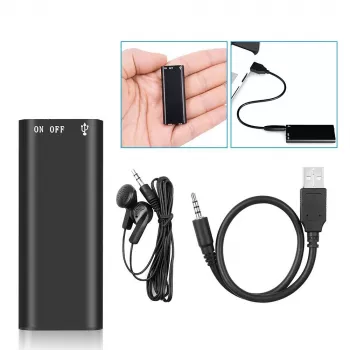
Mini 8GB Voice Recorder Digital Audio MP3 Player USB Pen with Earphones
A pen-style gadget keeps recording and listening simple: you can capture voice notes, meetings, classes, and reminders while you’re moving through your day, then plug in via USB to access files and use it as a compact audio player. Our team likes this mini 8GB voice recorder for everyday situations where you want something quick to grab, easy to store, and convenient to review with earphones.
Why this pen-style recorder fits everyday capture
When you want a straightforward tool for audio notes, a pen-format recorder is hard to beat. It’s small enough to live in a pocket, bag, or desk drawer, so you’re more likely to have it within reach when something important comes up.
- Pen-format design for easy carry in a pocket, bag, or desk drawer
- 8GB built-in storage to keep voice files and audio tracks in one place
- Works as a digital audio player for listening between tasks
- USB connection for straightforward access to stored files
- Earphones included for private listening and review
If you want a compact recorder that also handles MP3 playback, you can start with our Mini 8GB Voice Recorder Digital Audio MP3 Player USB Pen with Earphones.
What it helps with (common ways customers use it)
Most people don’t need studio gear—they need something they can use consistently. Here are practical ways you can put a mini recorder + MP3 player combo to work.
- Lectures and study sessions: save key explanations and review later
- Work meetings and interviews: keep spoken notes together without relying on a phone
- Personal reminders: record quick to-dos while commuting or moving between rooms
- Language practice: record pronunciation and replay with earphones
- Audio library on the go: keep a small set of MP3 tracks handy
Key features to look for in a mini recorder + MP3 player combo
Small devices vary most in day-to-day usability. If you’re comparing options, prioritize the details that affect how quickly you can record, save, and find your files later.
- Storage capacity: 8GB provides room for multiple recordings and music files
- USB access: a practical way to move files to a computer for archiving or sharing
- Private playback: included earphones make it easy to review recordings without speakers
- One device, two roles: voice recording plus MP3 listening reduces what you need to carry
How to use the voice recorder (quick start flow)
If your goal is “capture now, organize later,” a simple routine helps you avoid missed audio and confusing file piles.
- Charge/prepare the device if needed, then keep it accessible during the moment you want to capture.
- Start a recording, confirm it is capturing audio, and place it where voices are clear (closer is usually better).
- Stop/save after the session to avoid overwriting or confusion when organizing files.
- Use the earphones to review and confirm audio before deleting anything.
- Create a simple naming routine after transferring files (date + topic) so you can find recordings fast later.
Transferring files and listening back
USB file access is a big deal for mini recorders because it keeps your workflow simple: record, connect, copy, and back up. For anything important—like an interview, a class session, or a project meeting—backups are the difference between “I’ve got it” and “it’s gone.”
- Connect to a computer via USB to access stored audio files
- Copy recordings to a folder for backup, especially for important meetings or classes
- For music playback, keep compatible audio files organized in clearly named folders
- Use earphones for quick checks: verify the right file, the right segment, and the clarity before sharing
What’s included and what to keep on hand
- Mini 8GB voice recorder with USB pen-style form factor
- Earphones for listening and review
- Helpful add-ons to keep nearby: a dedicated folder on a computer for backups, and a simple file naming format for organization
Specs at a glance
Here’s a quick overview of what you can expect from this compact recorder/player setup.
| Detail | What to expect |
|---|---|
| Storage | 8GB built-in |
| Functions | Voice recording; digital audio/MP3 playback; USB file access |
| Form factor | Mini, pen-style device |
| In the box | Recorder + earphones |
| Availability | In stock |
Good recording habits (for clearer audio and easier review)
Even a great recorder can’t fix poor placement. A few small habits can noticeably improve clarity and save time when you review.
A note on consent and privacy
Always follow local laws and workplace/school rules before recording conversations or meetings. Laws can vary by state and situation, so it’s smart to confirm what applies to you using reliable references like the National Conference of State Legislatures (NCSL) overview of recording laws and consumer guidance from the Federal Trade Commission (FTC). When in doubt, ask for consent, be clear about why you’re recording, and store audio securely if it includes personal information.
More in-stock picks from our store
FAQ
Which brand of voice recorder is considered the best?
The best voice recorder depends on how you’ll use it—lectures, meetings, or quick personal notes—and what matters most to you, like storage capacity, simple USB file transfer, and private playback. A solid approach is to pick the feature set that matches your routine rather than chasing a single “best” brand.
How do I use the voice recorder?
Start a recording, place the recorder closer to the main speaker for clearer audio, then stop and save when you’re done. Review with the included earphones, connect via USB to transfer and back up files, and name them with a date and topic so you can find them later.
Recommended for you


Purpose of Going Live: Build Trust, Demo, and Sell
Oct 13, 2026













Leave a comment