-
Shop
- Advanced Technologies
- Best-Sellers
- Car Accessories
- Dating & Social Skills
- Digital Resources
- Budgeting & Saving
- Emotional Intelligence
- Entrepreneurship & Business Growth
- Financial Independence
- Financial Mindset & Psychology
- Goal Setting
- Leadership
- Mindfulness
- Motivation
- Online Business
- Positive Thinking
- Productivity
- Self Confidence
- Sleep Improvement
- Stress Management & Relaxation
- Yoga & Mind-Body Practices
- Education & Learning
- Family & Parenting
- Fashion
- Alexander McQueen
- Bags
- Bags & Wallets
- Balenciaga
- Belts
- Blazers
- Blouses & Shirts
- Bottega Veneta
- Bottoms
- Brunello Cucinelli
- Burberry
- Chanel
- Chloé
- Dior
- Dolce & Gabbana
- Dresses
- Etro
- Fendi
- Gucci
- Jacquemus
- Jewelry
- Jil Sander
- Keychains
- Kiton
- Luggage
- Luggage Bags
- Miu Miu
- Off-White
- Outerwear
- Prada
- Rick Owens
- Saint Laurent
- Shoes
- Socks & Tights
- The Row
- Tom Ford
- Valentino
- Valentino Garavani
- Versace
- Vivienne Westwood
- Fashion Accessories
- Furniture
- Gadgets
- Guess
- Headphones
- Health & Beauty
- Health & Wellness
- Home & Garden
- Home Supplies
- Kids & Babies
- Kitchen
- Kitchen Best-Sellers
- Lighting
- Patio, Lawn & Garden
- Personal Growth
- Pet Care
- Pet Supplies
- Pets
- Sport & Outdoors
- Super Deals
- TikTok Growth & Monetization Mastery
- Travel
- Wealth
- Popular
- Best deals
Discover Your Home Aesthetic: Decorating Styles Guide
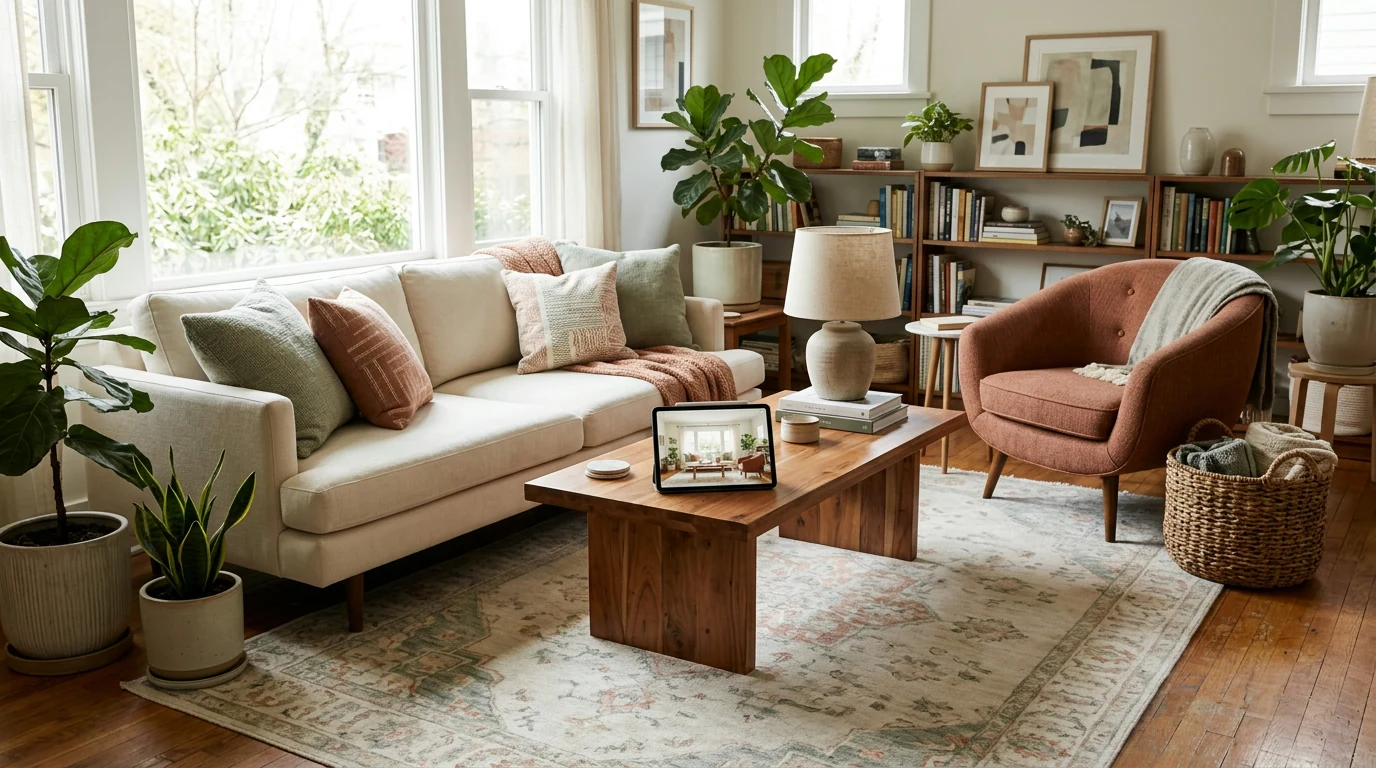
A home aesthetic isn’t something you have to pick once and follow forever. It’s a collection of colors, materials, shapes, and details that makes your space feel comfortable and distinctly yours. Whether you love streamlined furniture or rooms full of texture, a little exploration can help you make decorating decisions with confidence.
Our Your Ultimate Guide to Decorating Styles eBook is a starting point for discovering looks you enjoy. Begin with what you already love, then borrow ideas that fit the way you live.
Start With What Feels Like Home
Gather a handful of room ideas that appeal to you. They might come from a friend’s home, a magazine, a museum collection, or a saved image. Instead of focusing on the room as a whole, look for the details that appear more than once. Are you drawn to warm wood, crisp white walls, rounded furniture, or patterned fabrics?
Next, consider the mood you want in each room. A bedroom might call for a calm palette and soft textures, while a family room could feel better with playful color and plenty of layers. You may prefer a polished dining space but a relaxed reading corner. Your rooms can have different personalities while still sharing a few connecting colors or materials.
Think about your routines, too. If you use the living room for everything from movie nights to work calls, comfortable seating and useful surfaces may matter more than a perfectly styled arrangement. Take stock of what you own: a favorite lamp, rug, or table can be the starting point for a fresh look.
There’s no need to fit every choice into one category. The most inviting spaces often combine familiar styles in a way that feels natural to the people who live there.
Explore Popular Decorating Styles
Style names give you a useful vocabulary, not a set of decorating rules. Use the characteristics below to spot combinations you enjoy. For example, Scandinavian lightness can work alongside mid-century furniture, while traditional shapes can feel more relaxed with farmhouse textiles.
| Style | Typical characteristics | A simple starting idea |
|---|---|---|
| Modern | Clean lines and a restrained palette | Choose furniture with simple silhouettes |
| Traditional | Classic shapes and layered details | Pair a patterned textile with timeless furniture |
| Scandinavian | Light colors, natural materials, and practical forms | Add pale wood and a cozy throw |
| Mid-century modern | Streamlined shapes and warm wood tones | Try a sculptural chair or simple side table |
| Bohemian | Relaxed layers, varied patterns, and texture | Mix cushions and woven accents |
| Farmhouse | Comfortable pieces and rustic touches | Combine natural wood with soft neutral textiles |
As you compare these looks, notice whether you respond more to their shapes, colors, or atmosphere. You might like the practical forms of Scandinavian design without wanting an entirely light-colored room, or enjoy bohemian texture in a more restrained palette.
For a wider view of design history and decorative objects, explore the collections and resources from Cooper Hewitt, Smithsonian Design Museum and The Metropolitan Museum of Art’s Design and Decorative Arts department.
Turn Inspiration Into a Room Plan
Choose one primary style to guide the larger decisions, then borrow a few elements from a second. A modern room, for instance, can gain warmth from rustic wood and soft farmhouse textiles. A traditional room can feel lighter with simple Scandinavian accessories. Keeping the mix intentional helps the room feel cohesive without looking overly matched.
Build a small palette of two or three main colors, along with an accent if you want one. Repeat those colors across furniture, textiles, and accessories. You can do the same with materials: a wood table, a wooden frame, and a woven basket can create a connection even when their shapes differ.
Before buying anything, rearrange the pieces you already own. Moving a chair closer to a window or swapping cushions between rooms can reveal what’s missing. Measure the available space and consider pathways, seating needs, and how easily you can use nearby furniture. Make changes gradually so your plan can adapt to your room and budget.
For a streamlined dining area, our mid-century Nordic dining chair is one optional piece to consider. Compare its dimensions with your table and available floor space before deciding whether it suits your arrangement.
Keep Exploring With the Decorating Styles eBook
If you want more ideas as you refine your preferences, our Your Ultimate Guide to Decorating Styles eBook offers a starting point for exploring home decor styles and aesthetics. It’s listed at $22.99; visit the product page for purchase details.
Our team encourages you to treat every style as an invitation rather than a checklist. Keep the details that make your daily routines easier and the colors and textures you enjoy seeing. Over time, those choices can add up to a home that feels comfortably your own.
FAQ
How do you find out what your decorating style is?
Collect images of rooms and objects you enjoy, then look for recurring colors, materials, and shapes. Compare those patterns with familiar style descriptions while considering how you use your space.
What are the current decorating styles?
Commonly used styles include modern, Scandinavian, mid-century modern, traditional, bohemian, and farmhouse. Trends and individual preferences evolve, so choose the elements that feel right for your home.
What are different decorating styles called?
Recognizable names include modern, traditional, Scandinavian, mid-century modern, bohemian, and farmhouse. Many homes blend elements from several styles rather than following just one.
Recommended for you


Adorable Hooded Furry Pig Jumpsuit for Baby Girls
Nov 13, 2026
Current Decorating Styles: Find Your Perfect Look
Nov 14, 2026








Leave a comment