-
Shop
- Advanced Technologies
- Best-Sellers
- Car Accessories
- Dating & Social Skills
- Digital Resources
- Budgeting & Saving
- Emotional Intelligence
- Entrepreneurship & Business Growth
- Financial Independence
- Financial Mindset & Psychology
- Goal Setting
- Leadership
- Mindfulness
- Motivation
- Online Business
- Positive Thinking
- Productivity
- Self Confidence
- Sleep Improvement
- Stress Management & Relaxation
- Yoga & Mind-Body Practices
- Education & Learning
- Family & Parenting
- Fashion
- Alexander McQueen
- Bags
- Bags & Wallets
- Balenciaga
- Belts
- Blazers
- Blouses & Shirts
- Bottega Veneta
- Bottoms
- Brunello Cucinelli
- Burberry
- Chanel
- Chloé
- Dior
- Dolce & Gabbana
- Dresses
- Etro
- Fendi
- Gucci
- Jacquemus
- Jewelry
- Jil Sander
- Keychains
- Kiton
- Luggage
- Luggage Bags
- Miu Miu
- Off-White
- Outerwear
- Prada
- Rick Owens
- Saint Laurent
- Shoes
- Socks & Tights
- The Row
- Tom Ford
- Valentino
- Valentino Garavani
- Versace
- Vivienne Westwood
- Fashion Accessories
- Furniture
- Gadgets
- Guess
- Headphones
- Health & Beauty
- Health & Wellness
- Home & Garden
- Home Supplies
- Kids & Babies
- Kitchen
- Kitchen Best-Sellers
- Lighting
- Patio, Lawn & Garden
- Personal Growth
- Pet Care
- Pet Supplies
- Pets
- Sport & Outdoors
- Super Deals
- TikTok Growth & Monetization Mastery
- Travel
- Wealth
- Popular
- Best deals
Choose a Quality Stainless Steel Cutlery Set
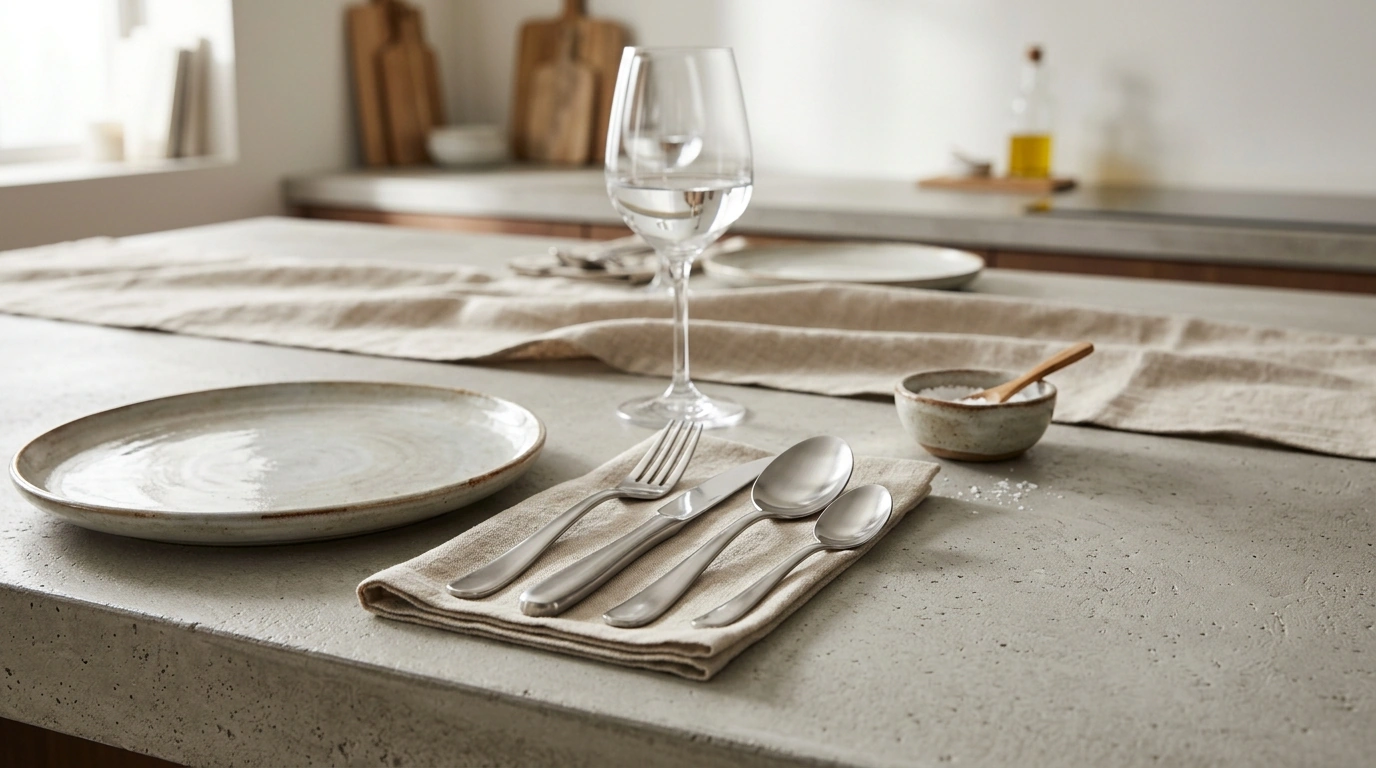
What makes a stainless steel cutlery set a good choice?
A good set feels comfortable in your hand, holds up to regular use, and is easy to care for. Rather than judging by appearance alone, compare the steel grade, construction, finish, and pieces included. The right choice depends on how you eat and how many place settings you need.
Which stainless steel grade should you look for?
Look for the steel composition in the product details. Labels such as 18/10 and 18/8 refer to chromium and nickel content; chromium helps resist corrosion, while nickel contributes to shine and durability. These grades are common in quality tableware, though care and manufacturing also affect how well cutlery performs. If you have a nickel sensitivity, look for nickel-free stainless steel options.
How can you judge construction and comfort?
Hold a piece, if possible, and notice whether its weight and balance feel comfortable to you. A sturdy handle should feel solid, with smooth edges and no rough seams. Fork tines should be evenly shaped, and spoon bowls should have a clean, comfortable contour. Knife blades need to suit your meals; table knives are designed for everyday dining, while sharper steak knives are useful for cutting meat at the table.
One-piece designs avoid joints between the handle and working end, while other sets may use attached handles. Neither construction is automatically right for everyone, so prioritize secure assembly and a finish that feels smooth in your hand. For more buying guidance, visit our stainless steel cutlery set guide.
What should a set include?
Start with the number of place settings you need, then confirm each setting includes the pieces you actually use, such as a dinner fork, salad fork, dinner knife, tablespoon, and teaspoon. Serving utensils may be included, but they are not part of every set. A smaller, well-made set can be more useful than a larger collection filled with pieces that rarely leave the drawer.
Does dishwasher-safe matter?
If you want easy cleanup, choose cutlery labeled dishwasher-safe and follow its care directions. Avoid leaving pieces wet or sitting in food residue for long periods; drying them promptly can help prevent spots and keep the finish looking its best. Our team recommends comparing care instructions alongside comfort and construction before choosing.
FAQ
How should you care for stainless steel cutlery?
Wash it soon after use, follow the manufacturer’s dishwasher guidance, and dry it promptly to reduce water spots. Avoid prolonged contact with salty or acidic food residue.















Leave a comment