-
Shop
- Advanced Technologies
- Best-Sellers
- Car Accessories
- Dating & Social Skills
- Digital Resources
- Budgeting & Saving
- Emotional Intelligence
- Entrepreneurship & Business Growth
- Financial Independence
- Financial Mindset & Psychology
- Goal Setting
- Leadership
- Mindfulness
- Motivation
- Online Business
- Positive Thinking
- Productivity
- Self Confidence
- Sleep Improvement
- Stress Management & Relaxation
- Yoga & Mind-Body Practices
- Education & Learning
- Family & Parenting
- Fashion
- Alexander McQueen
- Bags
- Bags & Wallets
- Balenciaga
- Belts
- Blazers
- Blouses & Shirts
- Bottega Veneta
- Bottoms
- Brunello Cucinelli
- Burberry
- Chanel
- Chloé
- Dior
- Dolce & Gabbana
- Dresses
- Etro
- Fendi
- Gucci
- Jacquemus
- Jewelry
- Jil Sander
- Keychains
- Kiton
- Luggage
- Luggage Bags
- Miu Miu
- Off-White
- Outerwear
- Prada
- Rick Owens
- Saint Laurent
- Shoes
- Socks & Tights
- The Row
- Tom Ford
- Valentino
- Valentino Garavani
- Versace
- Vivienne Westwood
- Fashion Accessories
- Furniture
- Gadgets
- Guess
- Headphones
- Health & Beauty
- Health & Wellness
- Home & Garden
- Home Supplies
- Kids & Babies
- Kitchen
- Kitchen Best-Sellers
- Lighting
- Patio, Lawn & Garden
- Personal Growth
- Pet Care
- Pet Supplies
- Pets
- Sport & Outdoors
- Super Deals
- TikTok Growth & Monetization Mastery
- Travel
- Wealth
- Popular
- Best deals
1080P Night Vision Binoculars: 5X Zoom + IR Guide
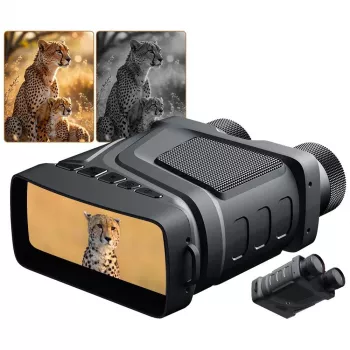
1080P Night Vision Binoculars with 5X Digital Zoom & Infrared Light
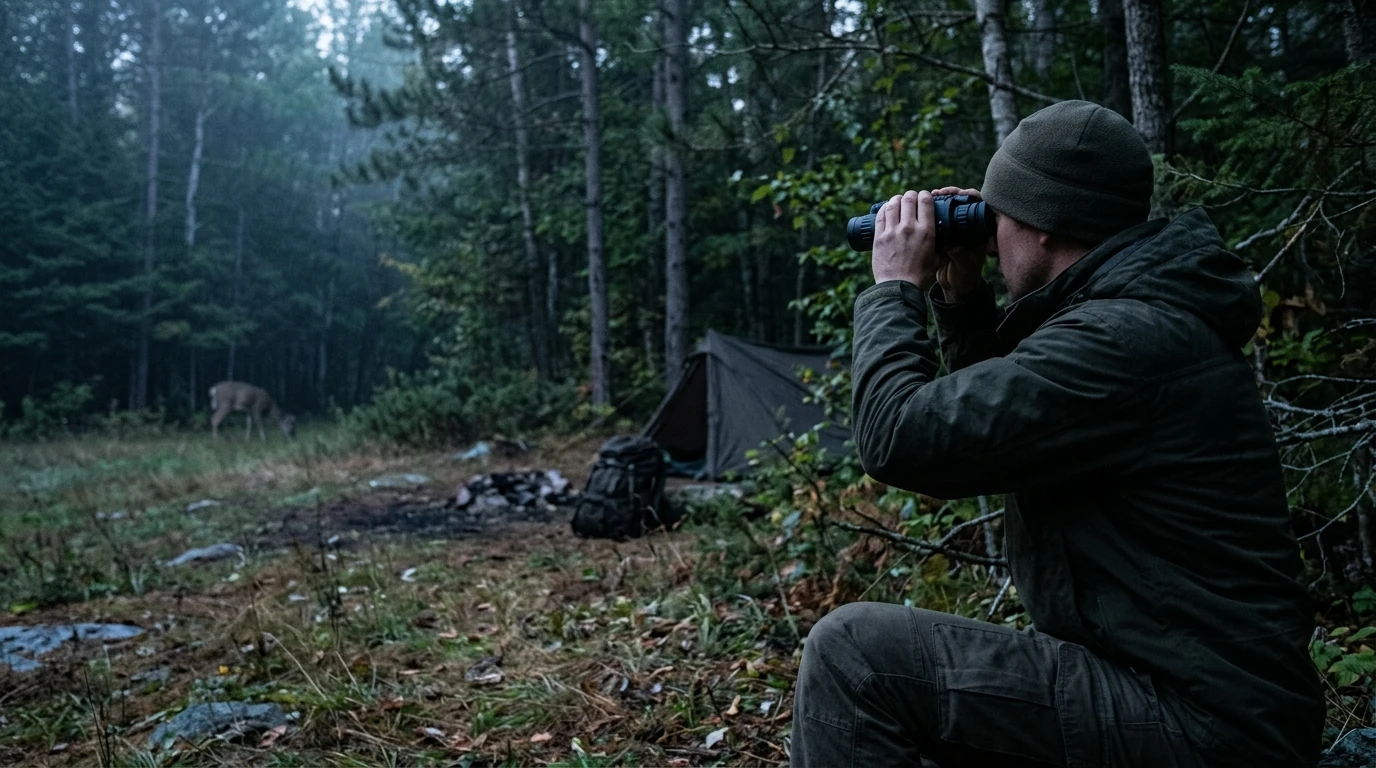
Nighttime viewing is toughest when there’s little ambient light, fast-moving subjects, and a need to see details without spooking wildlife or drawing attention. These 1080P night vision binoculars pair digital zoom with infrared illumination to help capture clearer views and recordings after dark for camping, wildlife watching, property monitoring, and night navigation. For more guidance, see GTMEDIA N4 Head Mount IR Night Vision Goggles.
What These Night Vision Binoculars Are Designed For
When daylight fades, standard optics quickly run out of usable detail. A handheld night vision viewer with infrared (IR) illumination is built for situations where you need to see without turning on bright visible lights. For further reading, see Night-vision device – Wikipedia.
- Wildlife observation at dusk or full darkness using infrared light rather than visible beams
- Camping and outdoor trips where a handheld viewer is easier than setting up a full camera system
- Basic property checks at night (yard, driveway, outbuildings) when lighting is limited
- Nighttime sightseeing and event viewing where standard optics struggle
Infrared light sits beyond the range of human vision (a quick primer is available from Encyclopaedia Britannica and NOAA SciJinks), which is why it’s commonly used to illuminate scenes without a bright white flashlight effect.
Core Features That Matter in Real Use
1080P recording for reviewable footage
Being able to record at 1080P can make a practical difference when you’re reviewing clips later—especially if the goal is confirming what you saw, not just getting a vague silhouette. It’s particularly useful for short clips of wildlife movement, trail activity, or campsite perimeter checks.
5X digital zoom to confirm details at a distance
Digital zoom helps you magnify what’s already captured by the sensor, so you can “move closer” without walking toward an animal or stepping into a dark area. It’s best used as a verification tool: spot a subject at normal view, then zoom in to identify it.
Infrared illumination for low-light and no-light scenes
In extremely dark conditions—backyards with the lights off, treelines away from moonlight, or unlit trails—IR illumination can be the difference between seeing nothing and seeing enough to navigate confidently. As with any IR-based device, conditions like fog, heavy rain, or highly reflective surfaces can reduce clarity.
Binocular-style handling for steadier scanning
The binocular form factor encourages a more stable grip than holding a phone or small monocular at arm’s length. When you’re scanning for movement, tracking an animal, or panning across a property line, that steadiness becomes more important—especially once you engage zoom.
Quick Specs and Use-Case Fit
These binoculars are best suited for short-to-mid range nighttime viewing where digital zoom and IR illumination fill in missing detail. Many users find the most effective approach is to spot outlines and motion first, then zoom to confirm what’s there.
If you prefer an all-in-one handheld unit over combining a separate camera with an external illuminator, this style of device is a practical middle ground: compact enough to bring along, yet capable enough to record and review.
At-a-Glance Capabilities
| Capability | What it Helps With | Typical Scenario |
|---|---|---|
| 1080P video | More recognizable detail in recordings | Reviewing wildlife clips after a night hike |
| 5X digital zoom | Getting closer views without approaching | Checking an animal across a field |
| Infrared illumination | Seeing in very low light or darkness | Backyard viewing with lights off |
| Handheld binocular form | More stable scanning and tracking | Following movement along a treeline |
How to Get Better Results at Night
- Stabilize the binoculars: Brace elbows against your torso or rest on a tree, car roof, railing, or pack to reduce shake—especially when zoomed.
- Start wide, then zoom: Scan at normal view to find your subject, then use digital zoom to confirm details once you’ve centered it.
- Use infrared thoughtfully: Increase IR only as needed. Too much IR at close range can flatten contrast, while too little IR at long range can hide detail.
- Minimize glare: Avoid reflective signs, glass, or nearby shiny surfaces that can bounce IR back into the sensor and wash out the image.
- Record short clips: Several short videos are often easier to review (and easier to share) than one long, low-light recording.
Where These Binoculars Shine (and Where They Don’t)
Night vision binoculars with IR are a strong fit for casual nighttime use—wildlife watching, campsite checks, nighttime exploring, and general after-dark viewing where you want a clearer look without turning on bright lights.
Care, Storage, and Practical Safety
Product Options Available
- 1080P Night Vision Binoculars with 5X Digital Zoom & Infrared Light
- Guess Women’s Printed T-Shirt with Round Neck
- Spray Shelter for Furniture & Craft Projects
FAQ
Does infrared light work in complete darkness?
Yes—infrared illumination can provide the light the device needs even when there’s no visible ambient light. Effective range and clarity vary based on distance, scene reflectivity, and weather conditions such as fog or rain.
Is 5X digital zoom the same as optical zoom?
No. Digital zoom enlarges the image electronically, which can reduce sharpness compared to optical zoom, and it also makes hand shake more noticeable. For clearer results, brace your arms or rest the binoculars on a stable surface when zoomed in.
Will these binoculars replace thermal imaging for night use?
They’re different tools. Night vision with IR illumination enhances visible/near-infrared detail in darkness, while thermal imaging detects heat signatures and can excel at spotting warm-bodied subjects through light obscurants. Which is “better” depends on whether you need detail recognition or heat detection.















Leave a comment