-
Shop
- Advanced Technologies
- Best-Sellers
- Car Accessories
- Dating & Social Skills
- Digital Resources
- Budgeting & Saving
- Emotional Intelligence
- Entrepreneurship & Business Growth
- Financial Independence
- Financial Mindset & Psychology
- Goal Setting
- Leadership
- Mindfulness
- Motivation
- Online Business
- Positive Thinking
- Productivity
- Self Confidence
- Sleep Improvement
- Stress Management & Relaxation
- Yoga & Mind-Body Practices
- Education & Learning
- Family & Parenting
- Fashion
- Alexander McQueen
- Bags
- Bags & Wallets
- Balenciaga
- Belts
- Blazers
- Blouses & Shirts
- Bottega Veneta
- Bottoms
- Brunello Cucinelli
- Burberry
- Chanel
- Chloé
- Dior
- Dolce & Gabbana
- Dresses
- Etro
- Fendi
- Gucci
- Jacquemus
- Jewelry
- Jil Sander
- Keychains
- Kiton
- Luggage
- Luggage Bags
- Miu Miu
- Off-White
- Outerwear
- Prada
- Rick Owens
- Saint Laurent
- Shoes
- Socks & Tights
- The Row
- Tom Ford
- Valentino
- Valentino Garavani
- Versace
- Vivienne Westwood
- Fashion Accessories
- Furniture
- Gadgets
- Guess
- Headphones
- Health & Beauty
- Health & Wellness
- Home & Garden
- Home Supplies
- Kids & Babies
- Kitchen
- Kitchen Best-Sellers
- Lighting
- Patio, Lawn & Garden
- Personal Growth
- Pet Care
- Pet Supplies
- Pets
- Sport & Outdoors
- Super Deals
- TikTok Growth & Monetization Mastery
- Travel
- Wealth
- Popular
- Best deals
Are Gooseneck Kettles Better for Coffee and Tea?
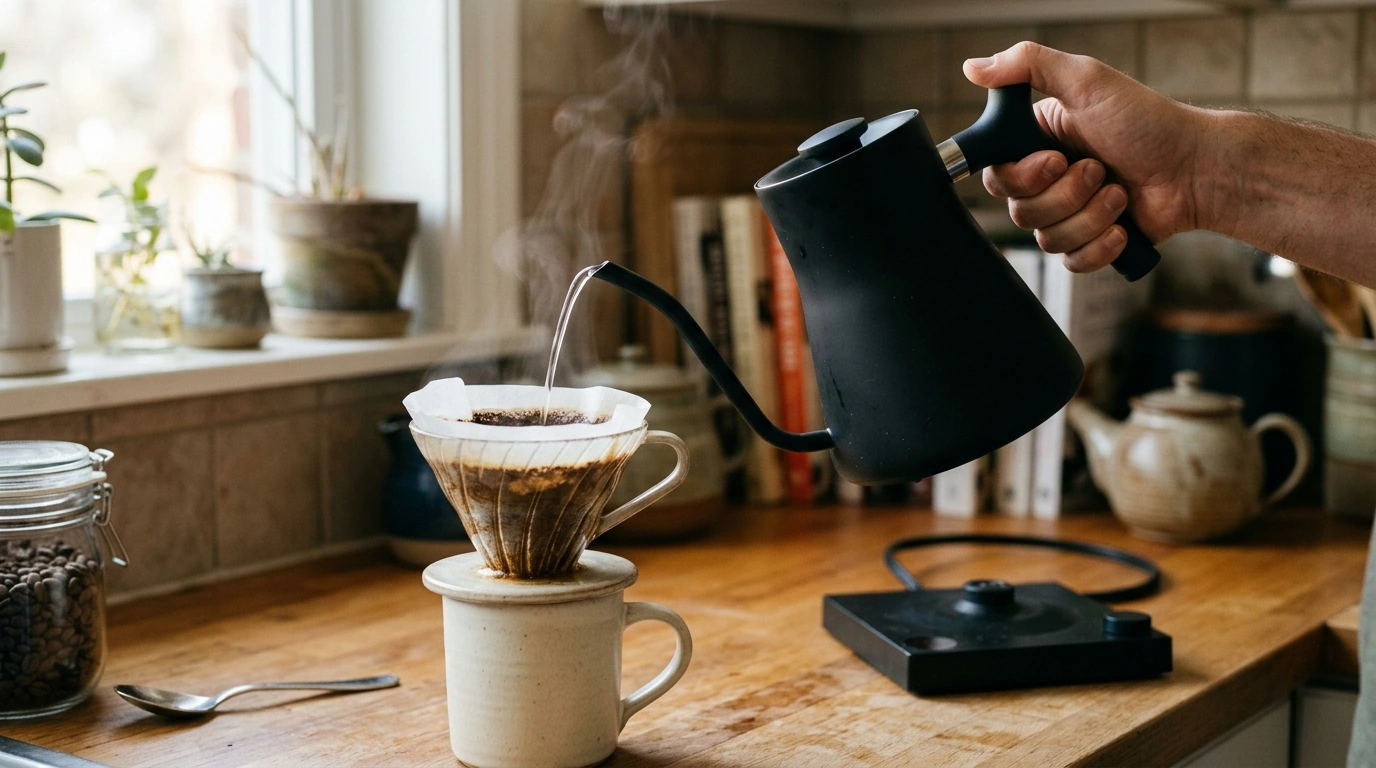
Are gooseneck kettles better?
Gooseneck kettles are better when you want a controlled pour, especially for pour-over coffee. Their long, narrow spouts let you direct water precisely and pour at a steadier rate than most standard kettles. For making tea, instant oatmeal, or a large pot of water, a conventional kettle may be just as useful and often faster to pour.
What makes a gooseneck kettle useful?
The curved spout gives you more control over where water lands. When brewing pour-over coffee, that control helps you wet the grounds evenly and avoid flooding the filter. You can also pour slowly in circles, which is harder to manage with a wide spout.
A gooseneck kettle does not automatically make coffee taste better. Your grind size, coffee-to-water ratio, and brewing method matter too. But if you enjoy adjusting your technique, a controlled pour makes those adjustments easier to repeat.
When is a standard kettle the better choice?
If your priority is quickly filling a teapot, mug, or saucepan, a standard kettle’s wider spout may be more convenient. Gooseneck spouts are designed for precision rather than a fast, generous stream. They can also take a little practice if you are used to pouring quickly.
For tea bags or other drinks that do not require a precise pour, you may not notice much benefit from the specialized spout. Choose the style that matches how you use your kettle most often.
What should you look for in an electric gooseneck kettle?
Start with a capacity that suits your routine. A 1-liter kettle can work well for individual pour-over brewing or several cups of tea, while a larger household may prefer more capacity. Consider whether you want adjustable temperature settings, an automatic shutoff, and a handle that feels comfortable and secure.
Use the kettle within its marked fill limits, keep the electrical base dry, and pour carefully around hot water and steam. For more guidance on choosing and using a 1-liter electric model, explore our electric gooseneck kettle guide.
FAQ
Can you use a gooseneck kettle for tea?
Yes. A gooseneck kettle can heat and pour water for tea, whether you brew with loose leaves or tea bags. Its precise spout is useful for filling smaller teapots and cups without splashing.
Recommended for you
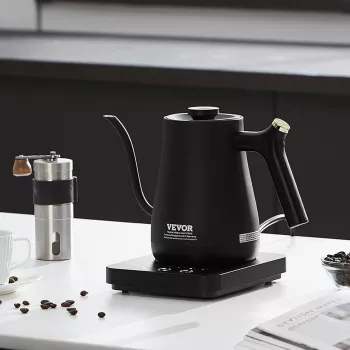


Best Gooseneck Electric Kettle: What to Look For
Nov 13, 2026
Why Are Gooseneck Kettles So Small? Size and Pouring
Nov 13, 2026












Leave a comment