-
Shop
- Advanced Technologies
- Best-Sellers
- Car Accessories
- Dating & Social Skills
- Digital Resources
- Budgeting & Saving
- Emotional Intelligence
- Entrepreneurship & Business Growth
- Financial Independence
- Financial Mindset & Psychology
- Goal Setting
- Leadership
- Mindfulness
- Motivation
- Online Business
- Positive Thinking
- Productivity
- Self Confidence
- Sleep Improvement
- Stress Management & Relaxation
- Yoga & Mind-Body Practices
- Education & Learning
- Family & Parenting
- Fashion
- Alexander McQueen
- Bags
- Bags & Wallets
- Balenciaga
- Belts
- Blazers
- Blouses & Shirts
- Bottega Veneta
- Bottoms
- Brunello Cucinelli
- Burberry
- Chanel
- Chloé
- Dior
- Dolce & Gabbana
- Dresses
- Etro
- Fendi
- Gucci
- Jacquemus
- Jewelry
- Jil Sander
- Keychains
- Kiton
- Luggage
- Luggage Bags
- Miu Miu
- Off-White
- Outerwear
- Prada
- Rick Owens
- Saint Laurent
- Shoes
- Socks & Tights
- The Row
- Tom Ford
- Valentino
- Valentino Garavani
- Versace
- Vivienne Westwood
- Fashion Accessories
- Furniture
- Gadgets
- Guess
- Headphones
- Health & Beauty
- Health & Wellness
- Home & Garden
- Home Supplies
- Kids & Babies
- Kitchen
- Kitchen Best-Sellers
- Lighting
- Patio, Lawn & Garden
- Personal Growth
- Pet Care
- Pet Supplies
- Pets
- Sport & Outdoors
- Super Deals
- TikTok Growth & Monetization Mastery
- Travel
- Wealth
- Popular
- Best deals
Home Office Decor Ideas for Focus, Style & Comfort
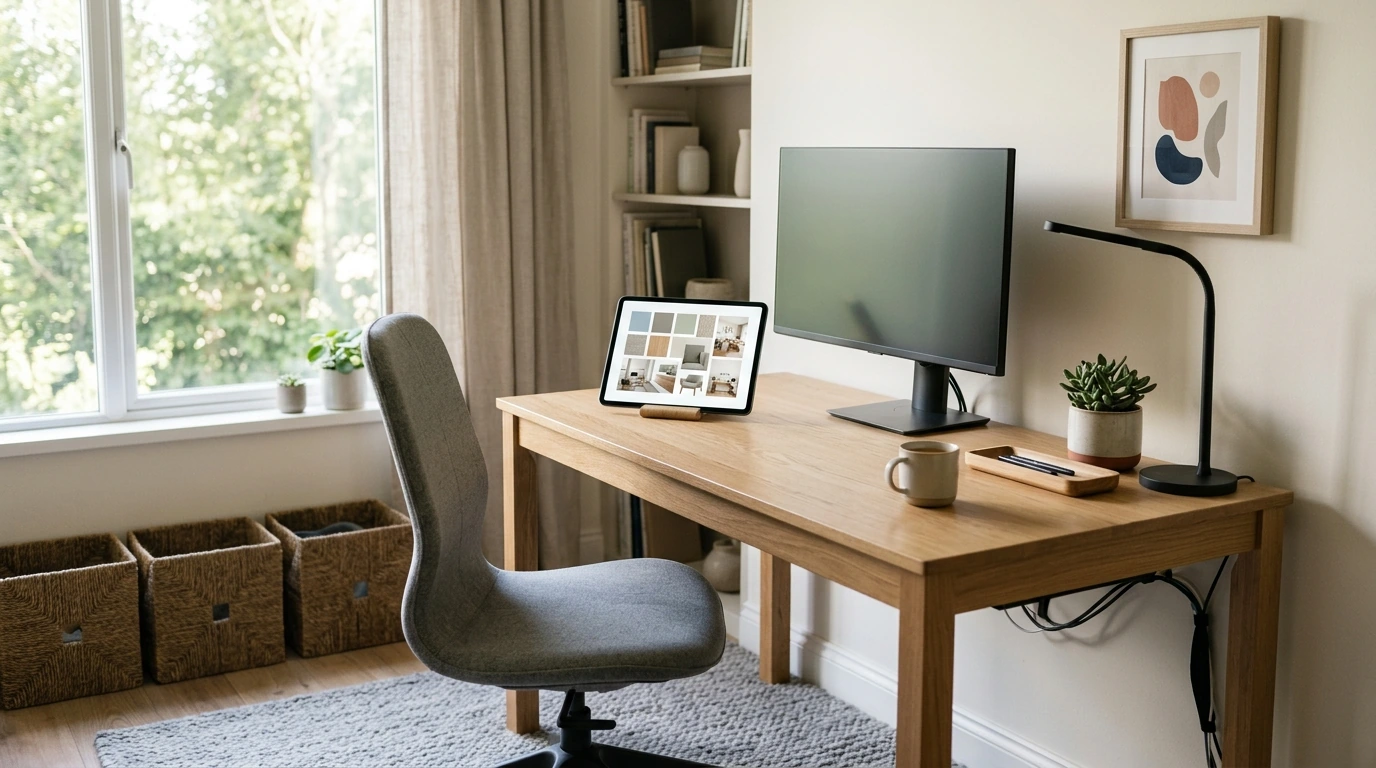
Inspiring Home Office Decor Ideas: Productivity, Style, and a Workspace That Feels Like You
A home office works best when it supports focus and feels personal. The easiest way to get there is to make decor decisions by function—light, layout, color, storage, and finishing touches—so the space looks intentional and makes it easier to settle into a productive rhythm.
Start With the Feel: Define Your Work Mode and Aesthetic
Before shopping, decide how the room should “behave” during your workday. Pick 2–3 guiding words—like calm, energetic, minimal, warm, bold, or classic—and use them as a filter for every purchase.
- Match the room’s purpose: deep-focus work, calls-heavy days, creative sessions, or mixed use.
- Choose a tight color direction: one main neutral, one accent, and one metal/wood tone.
- Decide what stays visible (planner, notes, reference books) vs. what should be hidden (cables, extra supplies).
If you want a step-by-step plan and room-by-room prompts, the Inspiring Home Office Decor Ideas Guide – Digital Download for Productivity, Style, and Personalized Workspace Inspiration helps turn “I want it nicer” into clear, doable choices.
Layout That Reduces Friction (Before Buying Anything)
Layout is the fastest productivity upgrade because it removes small annoyances that quietly drain attention. First, place the desk to control distractions: face a wall for focus, face the room for energy, or angle toward a window for daylight without direct glare.
- Create three zones: primary work (desk), support (printer/storage), and reset (a clear surface or a chair corner).
- Use reach-based organization: daily items within arm’s reach; weekly items in a nearby drawer; occasional items on a shelf.
- Plan cable routes first: choose a power strip location, add cable clips, and use one concealed channel so the surface reads calm.
Quick layout fixes and the results they tend to produce
| If the room feels like… | Try this change | What it improves |
|---|---|---|
| Cluttered | Move supplies into a lidded bin or drawer unit; keep only one tray on the desktop | Visual calm and faster start-up |
| Too dark | Add a task lamp + bounce light from a light wall or mirror | Energy and reduced eye strain |
| Distracting | Face a wall or add a low shelf divider behind the monitor | Attention control |
| Unfinished | Add one large art piece or a coordinated set above the desk | Intentional style |
| Cramped | Wall-mount shelves and use vertical organizers | More usable surface space |
Lighting and Color: Make Focus Easier
Lighting impacts both mood and stamina. Aim for layered lighting: ambient (room), task (desk), and accent (shelf or plant light). That mix helps the office feel designed, not improvised.
- Control glare by placing monitors perpendicular to windows; add adjustable shades if needed.
- Use color strategically: cooler neutrals feel crisp; warmer neutrals feel cozy; one bold accent adds energy without visual noise.
- Add reflective elements carefully (a mirror, glass, metallics) to brighten small rooms without adding clutter.
For ergonomics and visual comfort, it helps to follow practical workstation guidance from OSHA’s Computer Workstations eTool.
Personalized Touches That Still Look Polished
Personality belongs in a workspace—but a little curation keeps it from feeling busy. Pick one “signature” element that sets the tone: a framed print, a textured rug, a statement lamp, or a coordinated organizer set.
- Curate your video-call background: one focal point (art or shelf styling) plus one soft element (plant or fabric).
- Use meaningful objects in small doses: a memento, photo, or book stack contained to one area.
- Balance textures: wood with metal, matte with gloss, and soft textiles with clean-lined storage.
Storage That Doubles as Decor
Storage looks best when it’s consistent. The goal is a “family” of pieces rather than a patchwork of random containers.
- Pick a consistent storage style: matching baskets, uniform binders, or one color family.
- Go vertical to free the desktop: floating shelves, pegboards, or rail systems.
- Set up a simple “reset routine” station: a tray for loose items and a paper bin to sort weekly.
- Label subtly (small tags or a label maker) so it stays calm but functional.
Ergonomics That Blend In
If you’re upgrading seating for longer work blocks, a supportive, design-forward option like the Versatile Mid Century Nordic Dining Chair for Home and Events can help the office feel intentional—especially in a multipurpose room where style matters.
For additional ergonomic basics you can apply immediately, see Harvard Health Publishing’s ergonomic workspace tips.
Refresh the Space With Simple DIY Upgrades
For paint and refinish projects, the Spray Shelter for Furniture & Craft Projects helps keep overspray contained—useful when the “home office” is also a guest room, dining nook, or shared space.
Put It All Together: A 30-Minute Office Reset
If work stress is part of the challenge, small environmental improvements—like reducing clutter and improving lighting—can support healthier routines. The American Psychological Association’s guidance on managing work stress offers practical strategies that pair well with a calmer setup.
FAQ
What are the best home office decor changes for better productivity?
Start with layout (desk placement, zones, and reach-based organization), then add layered lighting and cable control. Finish with a small number of intentional decor elements—one focal point and one comfort upgrade—so the room feels clear and easy to use.
How can a small home office look stylish without feeling cluttered?
Use vertical storage, matching containers, and a limited color palette to create visual order. Keep the desktop mostly clear and rely on one larger art piece (instead of many small items) to make the space feel finished.
What colors work best for a focused home office?
Neutrals with one accent color tend to work best because they stay calm while still feeling personal. Cooler tones read crisp and modern, warmer tones feel cozy, and testing samples in your actual daylight helps avoid surprises.
Recommended for you

What Does the My Day App Do? Features and Uses
Sep 30, 2026








Leave a comment