-
Shop
- Advanced Technologies
- Best-Sellers
- Car Accessories
- Dating & Social Skills
- Digital Resources
- Budgeting & Saving
- Emotional Intelligence
- Entrepreneurship & Business Growth
- Financial Independence
- Financial Mindset & Psychology
- Goal Setting
- Leadership
- Mindfulness
- Motivation
- Online Business
- Positive Thinking
- Productivity
- Self Confidence
- Sleep Improvement
- Stress Management & Relaxation
- Yoga & Mind-Body Practices
- Education & Learning
- Family & Parenting
- Fashion
- Alexander McQueen
- Bags
- Bags & Wallets
- Balenciaga
- Belts
- Blazers
- Blouses & Shirts
- Bottega Veneta
- Bottoms
- Brunello Cucinelli
- Burberry
- Chanel
- Chloé
- Dior
- Dolce & Gabbana
- Dresses
- Etro
- Fendi
- Gucci
- Jacquemus
- Jewelry
- Jil Sander
- Keychains
- Kiton
- Luggage
- Luggage Bags
- Miu Miu
- Off-White
- Outerwear
- Prada
- Rick Owens
- Saint Laurent
- Shoes
- Socks & Tights
- The Row
- Tom Ford
- Valentino
- Valentino Garavani
- Versace
- Vivienne Westwood
- Fashion Accessories
- Furniture
- Gadgets
- Guess
- Headphones
- Health & Beauty
- Health & Wellness
- Home & Garden
- Home Supplies
- Kids & Babies
- Kitchen
- Kitchen Best-Sellers
- Lighting
- Patio, Lawn & Garden
- Personal Growth
- Pet Care
- Pet Supplies
- Pets
- Sport & Outdoors
- Super Deals
- TikTok Growth & Monetization Mastery
- Travel
- Wealth
- Popular
- Best deals
360° Rotating Faucet Extender: 2 Modes, Less Splash
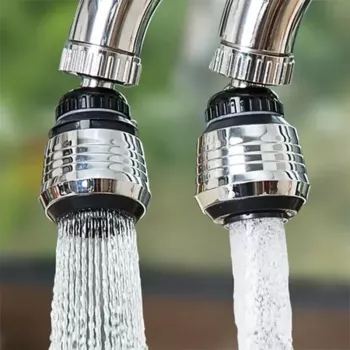
360 Rotatable Faucet Extender with 2 Modes: A Simple Upgrade for Better Reach and Less Splash
A small faucet add-on can make everyday sink tasks noticeably easier. A rotatable extender adds reach, redirects flow where it’s needed, and offers mode options that help rinse faster while reducing splash around the basin. For kitchens with deep bowls, bathrooms with short spouts, or any sink where water seems to hit the “wrong” spot, a 360° rotatable faucet extender can be a practical, low-cost improvement. For more guidance, see Water Conservation Faucet Attachment – Allied Business Academies.
What a Rotatable Faucet Extender Does
A rotatable faucet extender attaches at the end of your faucet (often where the aerator threads in) and creates an adjustable outlet you can aim. Instead of working around a fixed spout, you can direct water to the center of the sink, toward the corners, or closer to the front edge when you’re washing hands. For further reading, see Best & Most Sustainable Water-saving Faucets & Faucet Attachments.
- Adds an adjustable outlet at the end of a faucet to direct water more precisely
- Helps reach corners of the sink for rinsing produce, filling containers, or cleaning the basin
- Can reduce splashing by guiding water into the center of the sink instead of hitting the back wall
- Useful for kitchen and bathroom sinks where faucet spouts feel short or fixed
Many extenders also incorporate a simple flow regulator or aeration that changes how water feels and spreads, which can make daily tasks less messy and more controlled.
Two Modes and When to Use Each
Two-mode extenders usually include an aerated/stream-style setting and a shower/spray-style setting. The “best” option depends on whether you want a steady column of water or broader coverage for rinsing.
- Aerated/stream-style flow: good for handwashing and steady filling with less spray
- Shower/spray-style flow: useful for rinsing soap off hands, washing produce, and quick sink cleanups
- Switching modes can help match the task, avoiding excessive force for gentle rinsing and improving coverage for cleanup
- Aiming the extender downward can help keep water inside the basin and reduce countertop wetness
Mode Guide for Common Sink Tasks
| Task | Recommended mode | Angle tip |
|---|---|---|
| Handwashing | Aerated/stream | Aim slightly downward to reduce splashback |
| Rinsing toothbrush/razor | Aerated/stream | Keep flow centered over drain |
| Rinsing produce | Spray/shower | Angle toward bowl bottom for better coverage |
| Cleaning sink corners | Spray/shower | Rotate to reach edges without moving items |
Rotation and Reach: Why 360° Movement Matters
Rotation is the feature that turns a basic add-on into a real usability upgrade. A 360° rotatable head can redirect water left, right, up, or down depending on your sink layout and the task at hand.
- Rotatable heads can redirect water left/right and up/down depending on sink layout
- Makes it easier for kids or shorter users to bring water closer without leaning over
- Helps rinse tall items by directing flow around or into containers rather than directly beneath the spout
- Improves control when washing delicate items by avoiding direct high-impact flow
In bathrooms, that extra reach can reduce the common “knuckle bump” against the back of a sink when washing hands. In kitchens, it can make it easier to guide water into a pot or bottle without awkward angles.
Water Saving Benefits in Real Use
A faucet extender isn’t a magic switch that guarantees lower water use, but it can help reduce waste caused by misdirected flow and repeated rinsing attempts. The biggest difference often comes from control: hitting the right spot the first time and rinsing efficiently.
- More accurate direction means less wasted water while trying to hit the right spot
- Spray coverage can rinse surfaces faster, potentially shortening run time for quick tasks
- Aeration can make flow feel fuller while using less water than an un-aerated stream (varies by faucet and pressure)
- Best results come from combining the right mode with a controlled angle and moderate faucet opening
For background on how faucet aerators can influence water use, the EPA’s WaterSense program offers a helpful overview: WaterSense (EPA): Faucets and Aerators.
Compatibility and Installation Checks
Care, Cleaning, and Preventing Mineral Buildup
Product Snapshot: 360 Rotatable Faucet Extender with 2 Modes
Quick Specs to Note Before Buying
| Feature | What it affects |
|---|---|
| 360° rotation | Aiming water into corners, toward the drain, or toward the front of the sink |
| 2 modes | Switching between steady fill and broader rinse |
| Attachment type | Whether it fits your faucet threads or needs an adapter |
| Maintenance access | How easily buildup can be cleaned from the outlet |
Shop Related Home Upgrades
- 360 Rotatable Faucet Extender with 2 Modes – Water Saving Accessory
- Spray Shelter for Furniture & Craft Projects
- Versatile Mid Century Nordic Dining Chair for Home and Events
FAQ
Will a rotatable faucet extender fit my faucet?
Many extenders attach where the faucet aerator threads on, but you’ll need to confirm whether your faucet tip has male or female threads. If the thread type doesn’t match, an adapter may be required; measuring the aerator or checking the faucet documentation helps prevent ordering the wrong fit.
Why does my extender splash more after installation?
Splashing is often caused by high water pressure, using spray mode when a stream would be calmer, or aiming too high so water hits the basin wall. Try opening the faucet partway, switching modes, and angling the extender toward the bottom of the sink; also check for a clogged screen or mineral buildup that distorts the flow.
How do you clean mineral deposits from the outlet?
Soak the outlet end in a diluted vinegar solution to dissolve scale, then gently brush if needed and rinse thoroughly. Run water in both modes afterward to clear debris, and avoid harsh abrasives that can scratch or dull the finish.
Recommended for you

3L Vertical Sausage Stuffer: 3 Tubes, Cleaner Links
Sep 24, 2026













Leave a comment