-
Shop
- Advanced Technologies
- Best-Sellers
- Car Accessories
- Dating & Social Skills
- Digital Resources
- Budgeting & Saving
- Emotional Intelligence
- Entrepreneurship & Business Growth
- Financial Independence
- Financial Mindset & Psychology
- Goal Setting
- Leadership
- Mindfulness
- Motivation
- Online Business
- Positive Thinking
- Productivity
- Self Confidence
- Sleep Improvement
- Stress Management & Relaxation
- Yoga & Mind-Body Practices
- Education & Learning
- Family & Parenting
- Fashion
- Alexander McQueen
- Bags
- Bags & Wallets
- Balenciaga
- Belts
- Blazers
- Blouses & Shirts
- Bottega Veneta
- Bottoms
- Brunello Cucinelli
- Burberry
- Chanel
- Chloé
- Dior
- Dolce & Gabbana
- Dresses
- Etro
- Fendi
- Gucci
- Jacquemus
- Jewelry
- Jil Sander
- Keychains
- Kiton
- Luggage
- Luggage Bags
- Miu Miu
- Off-White
- Outerwear
- Prada
- Rick Owens
- Saint Laurent
- Shoes
- Socks & Tights
- The Row
- Tom Ford
- Valentino
- Valentino Garavani
- Versace
- Vivienne Westwood
- Fashion Accessories
- Furniture
- Gadgets
- Guess
- Headphones
- Health & Beauty
- Health & Wellness
- Home & Garden
- Home Supplies
- Kids & Babies
- Kitchen
- Kitchen Best-Sellers
- Lighting
- Patio, Lawn & Garden
- Personal Growth
- Pet Care
- Pet Supplies
- Pets
- Sport & Outdoors
- Super Deals
- TikTok Growth & Monetization Mastery
- Travel
- Wealth
- Popular
- Best deals
3L Vertical Sausage Stuffer: 3 Tubes, Cleaner Links
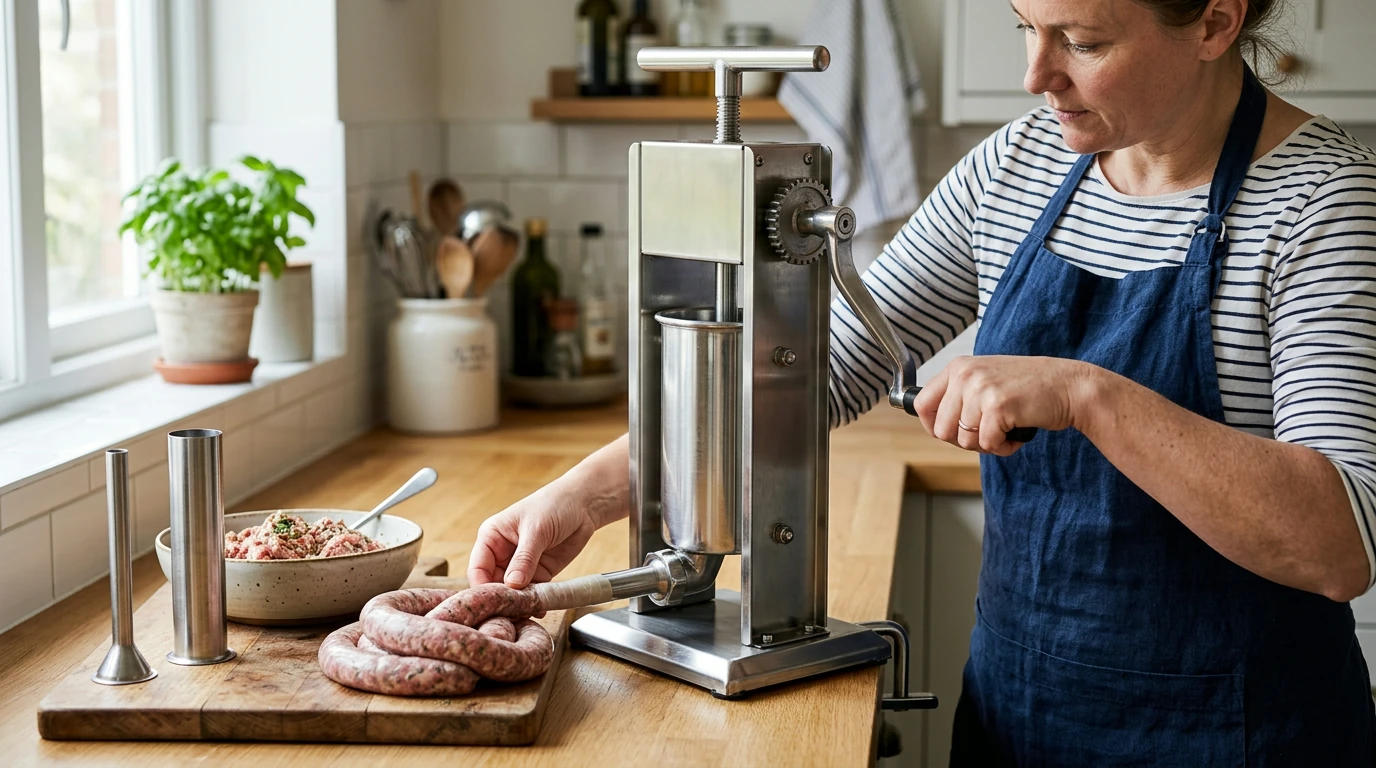
A vertical stuffer helps pack seasoned meat into casings with steady pressure and less mess than improvised methods. With a 3L cylinder and three tube sizes, this style suits weekend sausage runs, snack sticks, and bratwurst-style links—without taking over the countertop.
What a Vertical Sausage Stuffer Does (and Why the Vertical Design Matters)
A vertical sausage stuffer uses a simple, purpose-built setup: a cylinder holds the meat, a piston applies even pressure, and a stuffing tube guides the meat cleanly into the casing. Compared with forcing meat through a grinder for stuffing, a dedicated stuffer is designed to move the mixture as a cohesive mass, which helps reduce air pockets and casing blowouts.
The vertical orientation is especially practical in a home kitchen. It keeps the footprint compact, helps stabilize the cylinder while cranking or pressing, and makes it easier to work with a steady, repeatable rhythm. That consistency pays off whether you’re making fresh links for dinner, preparing sausages for curing (before they’re smoked or dried), or filling snack-stick casings with a smaller tube.
Capacity & Batch Planning: What 3 Liters Means in the Kitchen
A 3L capacity hits a sweet spot for small to medium batches: enough volume to make multiple meal portions without constant refilling, but not so large that it dominates storage space. Another advantage is speed—finishing the stuffing step sooner helps keep the mixture colder, which matters for texture and fat retention.
For smooth workflow, portion seasoned meat into “cylinder-sized” packs ahead of time and keep the next pack chilled until you’re ready to reload. If you’re testing spice blends, run one cylinder per variation, then cook small samples side-by-side for quick comparisons.
Quick guide to tube choice by casing and style
| Tube size (relative) | Best for | Typical casing types | Notes |
|---|---|---|---|
| Small | Snack sticks, breakfast links, thinner sausages | Collagen snack-stick casings, sheep casings | Keep mix cold; smaller tubes show air pockets sooner—pack firmly. |
| Medium | All-purpose links | Hog casings | A good default for most fresh sausages. |
| Large | Thicker sausages and faster fills | Larger hog or specialty casings | Useful when speed matters; avoid overfilling delicate casings. |
Stuffing Tubes: Getting Clean Fills Without Bursting Casings
Tube selection is less about “bigger is faster” and more about fit and control. Choose a tube that lets the casing slide on easily without stretching it dry. If you have to tug hard to load the casing, you’re setting yourself up for bursts once pressure builds.
A light rinse or wetting of the tube and casing reduces friction; just avoid soaking everything to the point where the casing becomes too slippery to guide. As you stuff, feed meat steadily while keeping gentle back-pressure on the casing with your guiding hand. That back-pressure helps maintain a uniform diameter and reduces thin spots.
If small air pockets appear, pause and massage the casing forward to redistribute the fill. Pricking bubbles with a sanitized pin is a last resort for tiny trapped pockets—use a minimal puncture and keep moving so the casing doesn’t tear. For snack-stick styles, the smaller tube makes technique more noticeable, so pack the cylinder firmly and keep everything cold.
Key Features to Look For in a Vertical Stuffer
Good sausage texture is part recipe and part equipment. A stable base and secure cylinder mounting prevent wobble during cranking, which helps maintain steady pressure. Smooth piston travel matters even more when your mixture is cold and stiff—jerky movement can force air into the casing or cause uneven density.
Cleaning is another make-or-break feature. Stuffers that disassemble easily (and don’t hide fat in tight crevices) are much simpler to keep odor-free. Food-contact surfaces should tolerate hot, soapy washing and thorough drying. Finally, a three-tube set covers most home-cook casing needs without forcing extra purchases just to try a new style.
Setup and Use: A Repeatable Process for Better Texture
Start cold. Chill the cylinder, piston, and tubes before stuffing to help prevent fat smearing. Mix your meat to a proper bind: the mixture should feel tacky so it pushes through as one mass instead of crumbling or separating.
Cleaning and Care: Keeping the Stuffer Odor-Free and Smooth
For safe handling and storage guidance, consult resources like the USDA Food Safety and Inspection Service and freezing best practices from the National Center for Home Food Preservation.
Common Issues and Quick Fixes
Product Snapshot: 3L Vertical Stuffer with 3 Stuffing Tubes
If controlled filling is the goal, a dedicated stuffer can make technique easier to learn because pressure stays more consistent than improvised setups. The Vertical Sausage Stuffer with 3L Capacity & 3 Stuffing Tubes is designed for practical home batches—family meals, cookouts, and freezer prep—while covering common casing types with three tube sizes.
For other at-home projects and upgrades, browse additional in-stock items like the Spray Shelter for Furniture & Craft Projects or the Versatile Mid Century Nordic Dining Chair for Home and Events.
FAQ
What can be made with a 3L vertical sausage stuffer?
You can make fresh links, breakfast sausage in casings, bratwurst-style coils, Italian-style links, and snack sticks (with the appropriate smaller tube and casing). It’s also a convenient size for testing spice blends in small batches and portioning links for freezer prep.
How are air pockets reduced when stuffing sausage?
Keep the meat and parts cold, pack the cylinder firmly in layers, and purge meat to the tube tip before adding the casing. Crank steadily while maintaining gentle back-pressure on the casing; prick tiny bubbles only when necessary.
Which stuffing tube size should be used for different casings?
Use the small tube for snack-stick or sheep casings, the medium tube for most hog casings, and the large tube for thicker casings or faster filling. The best choice is the one that lets the casing slide on easily without overstretching.
Recommended for you
360° Rotating Faucet Extender: 2 Modes, Less Splash
Sep 24, 2026













Leave a comment