-
Shop
- Advanced Technologies
- Best-Sellers
- Car Accessories
- Dating & Social Skills
- Digital Resources
- Budgeting & Saving
- Emotional Intelligence
- Entrepreneurship & Business Growth
- Financial Independence
- Financial Mindset & Psychology
- Goal Setting
- Leadership
- Mindfulness
- Motivation
- Online Business
- Positive Thinking
- Productivity
- Self Confidence
- Sleep Improvement
- Stress Management & Relaxation
- Yoga & Mind-Body Practices
- Education & Learning
- Family & Parenting
- Fashion
- Alexander McQueen
- Bags
- Bags & Wallets
- Balenciaga
- Belts
- Blazers
- Blouses & Shirts
- Bottega Veneta
- Bottoms
- Brunello Cucinelli
- Burberry
- Chanel
- Chloé
- Dior
- Dolce & Gabbana
- Dresses
- Etro
- Fendi
- Gucci
- Jacquemus
- Jewelry
- Jil Sander
- Keychains
- Kiton
- Luggage
- Luggage Bags
- Miu Miu
- Off-White
- Outerwear
- Prada
- Rick Owens
- Saint Laurent
- Shoes
- Socks & Tights
- The Row
- Tom Ford
- Valentino
- Valentino Garavani
- Versace
- Vivienne Westwood
- Fashion Accessories
- Furniture
- Gadgets
- Guess
- Headphones
- Health & Beauty
- Health & Wellness
- Home & Garden
- Home Supplies
- Kids & Babies
- Kitchen
- Kitchen Best-Sellers
- Lighting
- Patio, Lawn & Garden
- Personal Growth
- Pet Care
- Pet Supplies
- Pets
- Sport & Outdoors
- Super Deals
- TikTok Growth & Monetization Mastery
- Travel
- Wealth
- Popular
- Best deals
6CH RC Fighter Plane Guide: 2.4G EPP Foam for Kids
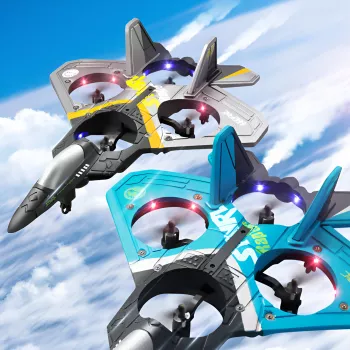
Remote Control RC Airplane 6CH Fighter Toy (2.4G EPP Foam Glider) for Kids and Beginners
A lightweight foam RC plane can be an easy entry into flight skills, especially when the airframe is built to handle bumps and quick repairs. A 6-channel fighter-style RC airplane adds more “real aircraft” control than basic toy planes, while a 2.4G radio system helps keep the connection steady when other RC models are nearby. Below is a practical guide to what this style of RC airplane is best for, what to confirm before buying, and how to set yourself up for a smoother first flight.
What this RC airplane is designed for
A 6-channel foam fighter plane is typically meant for outdoor fun with enough control authority to learn real fundamentals (like coordinated turns and throttle management) without needing a full hobby-grade workshop.
- Casual backyard flights and learning coordinated turns with more control than 2–4 channel toy planes
- Beginner-to-intermediate practice with a fighter-style profile that favors responsive handling
- Gift-friendly option for kids with adult supervision, especially for outdoor hobby time
- Short sessions that fit parks and open fields rather than tight indoor spaces
Key features to look for in a 6-channel foam fighter plane
Not all “6CH” listings are identical, so it pays to verify what the channels do, what replacement parts exist, and whether the control surfaces are truly functional (not molded-in decoration).
Feature checklist and why it matters
| Feature | What to confirm | Why it matters |
|---|---|---|
| Channels | Which functions the 6 channels control on this model | Determines how advanced the flight handling can be and what skills can be practiced |
| Radio band | 2.4G transmitter and receiver pairing method | More reliable control and fewer conflicts when multiple RC models are used nearby |
| Material | EPP foam body and wing construction | Better survivability in beginner landings and easier repairs |
| Power system | Battery type and charger method listed on the product page | Affects flight time, charging convenience, and ongoing costs |
| Control surfaces | Whether ailerons/rudder/elevator are active (not decorative) | Improves turning control and stability when learning coordinated flight |
| Spare parts | Propellers, landing gear (if included), and battery availability | Reduces downtime and keeps the gift usable long-term |
- 6-channel control: commonly enables throttle plus elevator/ailerons/rudder for more realistic maneuvering (exact mapping depends on the model).
- 2.4G radio link: helps reduce interference compared with older fixed-frequency systems and is friendlier for group flying.
- EPP foam airframe: chosen for impact resistance and quick repairs using foam-safe glue or reinforced tape.
- Fighter-style layout: often feels more agile than a high-wing trainer; smoother stick inputs usually make it easier to manage.
- Replacement parts: spare props and batteries are the difference between “one-and-done” and a toy that keeps getting used.
Getting ready for the first flight
Most “beginner frustration” comes from flying in the wrong space, flying in too much wind, or skipping basic pre-flight checks.
- Choose the right space: pick a wide, open field away from roads, trees, power lines, and crowds. Small yards feel convenient but leave no margin for error.
- Wind check: start in light wind. Gusts can overpower small foam aircraft and trigger tip-stalls during turns or landing.
- Pre-flight inspection: confirm wings and tail are secure, control surfaces move freely, and the prop area is clear before arming throttle.
- Battery routine: fully charge before the session and stop flying when power drops; low power leads to sudden sink and harder landings.
- Control check: verify directions on the ground (left/right, up/down). If the transmitter supports reversing, correct any wrong direction before takeoff.
How to fly a fighter-style foam glider without frustration
A fighter-style profile can feel “twitchy” if the pilot moves the sticks like a video game controller. Small corrections and a predictable flight pattern help the plane settle.
Durability and simple repairs (EPP foam basics)
Safety and responsible flying
- Keep distance: maintain a buffer from people, pets, and vehicles; never fly directly toward others.
- Battery handling: charge on a non-flammable surface and follow the included battery/charger instructions.
- Local rules: check community park policies and applicable guidance for recreational flyers from the Federal Aviation Administration (FAA).
- Safety code: community-based best practices (like flight line spacing and spectator areas) are outlined by the Academy of Model Aeronautics (AMA).
Who this makes a good gift for
Product options available
- Spray Shelter for Furniture & Craft Projects (USD 40.51)
- Guess Women’s Printed T-Shirt with Round Neck (USD 32.02)
FAQ
Is a 6-channel RC airplane too advanced for a beginner?
It can still be beginner-friendly when flown gently in a large open field and in light wind. The extra channels mainly add more realistic control, so starting with smooth turns at a safe altitude helps build confidence quickly.
What does EPP foam change compared with hard plastic?
EPP foam is typically more impact-resistant and easier to repair with foam-safe glue or reinforcing tape, which is why it’s popular for learning. It can still crack or shift out of alignment, so it’s smart to check the wing and tail straightness after any bump.
Where is the best place to fly a small RC plane?
A wide, open field away from people, traffic, trees, and power lines is best, especially for early flights. Choose calm conditions when possible and follow local park policies and basic safety spacing.
Recommended for you

Top Rated Baby High Chair: What to Look For
Sep 20, 2026













Leave a comment